Keeping Boat, Tractor and Truck Electrics Ready to Start
Equipment that only runs occasionally needs its electrical system checked on its own schedule, not just when something finally quits.
September 23, 2026 · 4 min read
A car gets driven most days, which means its battery gets recharged most days and its wiring gets a regular workout. A boat, a tractor, or a work truck that only runs seasonally or on and off doesn't get that benefit, and that difference is exactly why electrical problems on equipment that sits tend to show up as a dead battery or a no-start the one day you actually need it. The good news is that most of it is predictable, and predictable means preventable. It also means a lot of it can be caught before it ever becomes a no-start, rather than discovered the hard way at the boat ramp or in the field.
A battery that sits is different from a battery that runs
Every battery loses a small amount of charge over time even when nothing's connected to it, a natural process called self-discharge, and most vehicles and equipment also have a handful of small parasitic draws, an alarm, a clock, a module that stays partly awake, quietly pulling current around the clock. On a car driven daily, the alternator replaces that loss every trip. On a boat or tractor that sits for weeks or months, there's nothing replacing it, and a battery left low for long stretches can sulfate, a chemical change inside the battery that permanently reduces how much charge it can hold. By the time you go to start it, the battery may run lights and accessories fine but simply can't deliver the punch a starter motor needs.
Why keeping a charge topped up beats waiting for a jump
Keeping a battery topped up between uses does more for it than any single fix after the fact. A battery kept near a full charge resists sulfation far better than one left to sit at a partial charge for weeks or months, and it's one of the few things about a charging or starting system that an owner can address directly without any tools beyond a charger. It's a small habit that trades a few minutes now for avoiding a no-start on the day the boat, tractor or truck is actually needed.
Charging systems don't get a rest, either
The alternator or charging system on a boat, tractor or truck wears the same way any alternator does, through brushes, bearings and belts that age with time and use, not just with miles. Marine environments add another layer, since moisture, and for saltwater boats, salt air, accelerate corrosion at terminals and connectors far faster than a garage-kept car ever sees. A charging system that's already a little marginal often shows its weakness first on equipment that only gets asked to work occasionally, rather than on something running every day where a small problem gets caught early. A quick visual check of belts and connections at the start of the season catches most of this before it turns into a no-start.
Starting systems in a tougher environment
Starters on equipment that lives outside, in a barn, on a trailer or tied up at a dock, face the same wear as any starter, plus more exposure to moisture and temperature swings. Corroded connections are one of the most common reasons a piece of equipment that started fine last season won't turn over this one, and it's often a simpler fix than it looks like from the driver's seat, cleaning and tightening rather than replacing anything. Rinsing salt and grime off battery terminals and connectors after time on the water is worth the two minutes it takes, since salt residue left in place keeps working on the metal long after the boat is back on the trailer.
A little attention between seasons goes a long way
The equipment most likely to leave you stranded is the equipment you don't think about between uses. A quick check before storage, and again before the season it's needed, catches a weak battery, a corroded terminal or a marginal charging system while it's still a small fix rather than a no-start on the morning you planned to be on the water or in the field. None of it takes long, and all of it is cheaper and easier before the season starts than after.
- Batteries in equipment that sits benefit from a charge check before storage, not just before the next use
- Corrosion at battery terminals and connectors shows up faster on equipment left outside or on the water
- A marginal charging system often shows itself first on equipment that only runs occasionally
- Wiring exposed to weather is worth checking before, not after, the season it needs to work
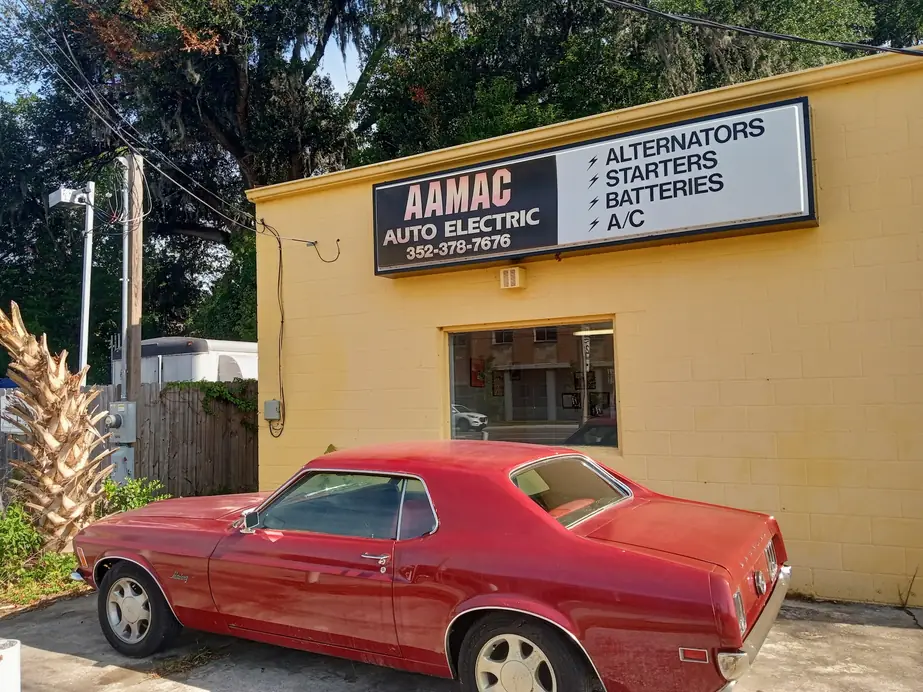
AAMAC Auto Electric works on electrical systems for cars, trucks, boats and tractors around Gainesville, with technicians who understand that equipment which sits between uses fails differently than a daily driver. A free electrical-system check is a good way to catch a weak battery or charging system before it strands you. Call (352) 378-7676 to set one up.
AAMAC Auto Electric, (352) 378-7676
Call (352) 378-7676More articles
Battery, Starter or Alternator? How to Tell Which One Failed
A car that won't start is telling you something specific, if you know what to listen for.
What a Refurbished Alternator or Starter Actually Is
Refurbished doesn't mean used as-is, and the warranty behind it is worth understanding before you say yes to the work.